What We’re Building This Year at CIP
More ways to create, learn, grow, and show the journey.
Every year, there is a point when all the planning finally gives way to the part I love most. The kids come back into the room.
Creative Innovators Project grew through Odyssey of the Mind, and we have done that work well. Our students have taken complicated, open-ended problems and turned them into original solutions. Families have watched them compete, perform, adapt under pressure, and proudly stand beside something they created themselves.
But competition only shows a small part of what actually happened.
You see the eight-minute solution. You do not always see the months of strange ideas, failed builds, arguments, breakthroughs, rebuilding, research, leadership, laughter, and persistence that made it possible. And you definitely do not always see what was changing inside the student while all of that was happening.
That is what we want to make more visible this year.
One belief sits underneath almost everything we do at CIP: children become more capable by having real opportunities to be capable.
We can tell a child they are creative, resilient, or a leader. But there is something completely different about a child being able to say, I figured that out. I rebuilt that. I helped my team. I didn’t know I could do that.
Research in learning, motivation, creativity, self-efficacy, and human development has helped us better understand why those experiences matter. But long before I knew the research, I watched it happening in front of me.
This year, we are becoming much more intentional about noticing it.
Making the learning and development visible
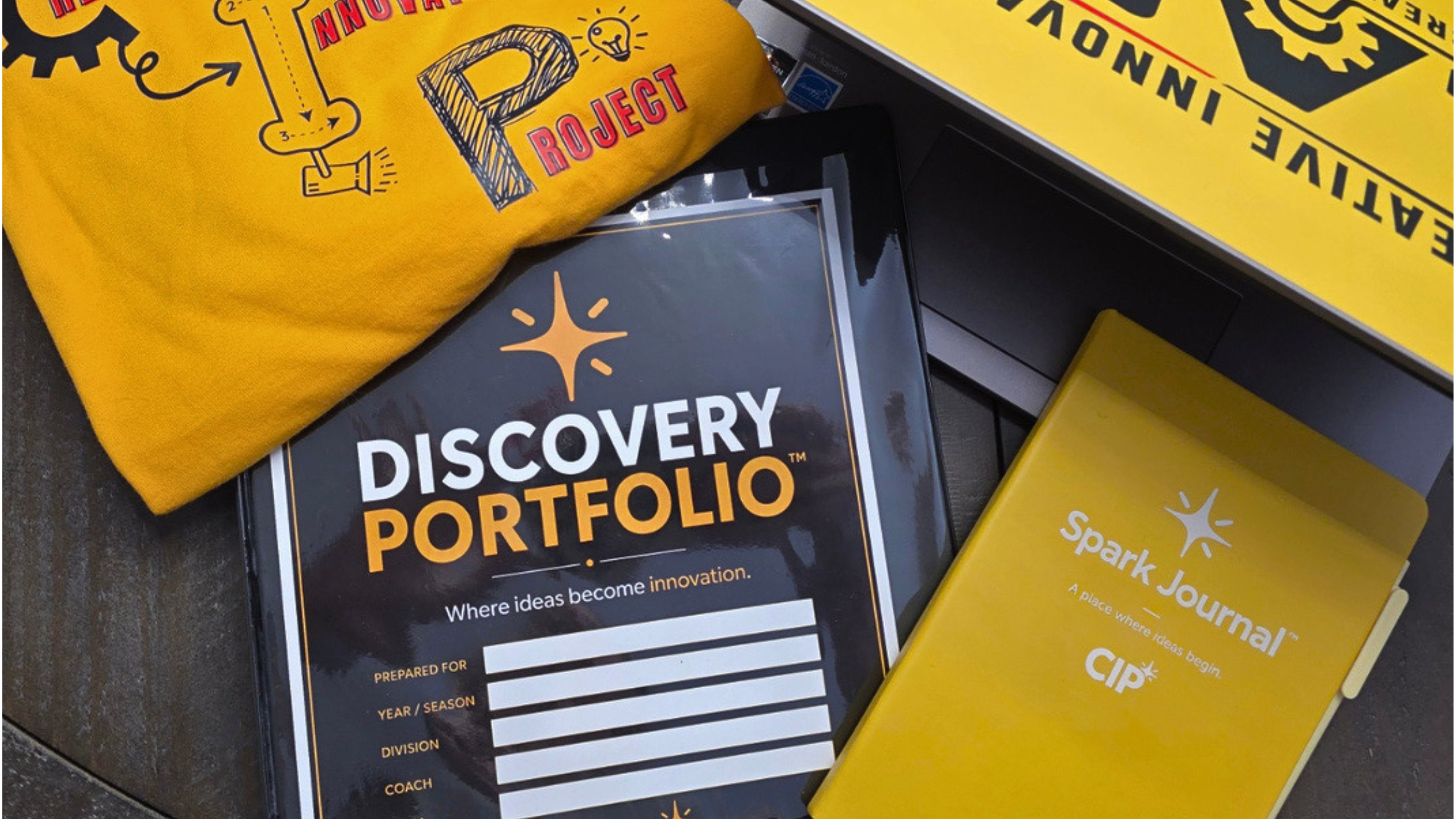
Students will use Spark Journals™ for the messy thinking that usually disappears: sketches, questions, measurements, strange ideas, failed attempts, observations, and things they are still trying to understand.
Their Discovery Portfolios™ will preserve the pieces worth remembering. A prototype that changed. An idea that finally worked. A responsibility they took on. Evidence of something they can do now that they could not do before.
These are not school assignments.
They exist because if we only save the final product, we lose the most interesting part of the story: how the student got there.
Even more importantly, we lose evidence of how the student changed along the way.
A project may become stronger while a student is also becoming more confident, more resilient, more independent, more willing to contribute, or more capable of working through uncertainty and conflict.
Those changes can be harder to see.
This year, we want to pay attention.
That is also why we are introducing three separate CIP Showcases for our families and community.
Rather than waiting until competition or the end of the year, these events will give students opportunities to demonstrate what they are learning while the work is still developing.
The first will focus on discovery, including the questions, possibilities, and early ideas taking shape.
Later, families will see the prototype stage, when ideas have met reality. Some things will work. Some absolutely will not. Students will be testing, rebuilding, and using what they learn to make better decisions.
As the year moves toward refinement, students will have another opportunity to show how far their work has come, what changed, why it changed, and what they learned through making it better.
The goal is not three polished performances.
It is to let families see more of the process that has always been happening behind the scenes.
More ways to think, build, and learn
Students will continue doing what CIP kids have always done: facing problems without predetermined answers.
They will brainstorm, research, build, test, communicate, disagree, compromise, adapt, and try again. We are also strengthening our regular Spontaneous practice because creative thinking grows through practice. Students need repeated opportunities to encounter something unfamiliar and ask, What else could work?
They are also going to notice something else this year: a lot more to work with.
With generous support from the Valmark Global Gift Fund, CIP has been able to expand many of the tools, materials, and hands-on resources available to students. That includes new building and prototyping resources and our DIB-DIP-DIS kits, designed to support the different kinds of work students move through as they explore possibilities, test ideas, refine solutions, and communicate what they have created.
Students will also have access to technology brought into CIP experiences through the Creative Innovator Lab, a separate privately owned innovation lab. The Lab is bringing equipment including computers and our interactive ViewSonic display, giving students more ways to research, visualize, create, test, and communicate their ideas.
The goal is not to fill the room with impressive equipment.
It is to give students better tools for taking an idea and doing something with it.
Preparing kids for a changing world
That matters especially when it comes to artificial intelligence.
Our students are growing up in a world where technology is changing quickly. So are the rules, expectations, laws, and questions around privacy, authorship, safety, and responsible AI use.
We want CIP to stay current with those changes so our students are prepared to use new technology safely and thoughtfully.
We do not know exactly what technology, careers, or workplaces will look like five or ten years from now. We do know our students will need good judgment.
They need to know when a tool is useful and when it is not. They need to know what information should stay private, who created the work they are using, what responsibilities come with new technology, and how to adjust when the tools change again.
That is the thinking behind Build First. AI Second.™
Students encounter the problem first. They ask questions, imagine possibilities, build, test, notice what happens, and develop their own thinking. Then technology can help them go farther.
More technology does not have to mean less human thinking.
We want young people who know how to use powerful tools without handing over the thinking that belongs to them.
More people, more possibilities
Students will also begin seeing more people enter the CIP world through our growing Mentor Network.
CIP was never meant to become a place where one coach has to know everything. Our students’ work can cross engineering, art, construction, writing, performance, technology, design, and all kinds of other fields.
Mentors can bring real-world knowledge and perspective into that work without taking ownership away from the students.
Sometimes a mentor may help a child understand a problem differently. Sometimes the most important moment may simply be a student realizing, People actually do this for a living.
That can change what a young person imagines for themselves.
There will also be additional opportunities students can choose beyond the core team season. Our developing entrepreneurship pathway is one of those. It is a separate opportunity for interested students to take ideas farther into product development, mentorship, prototyping, feedback, budgeting, and pitching.
It is not another requirement added to weekly practice.
We want CIP to keep growing what students can access without making every student do everything.
What I hope we see by spring
Of course I want incredible projects.
I want strong performances, wild ideas, clever engineering, beautifully refined work, and teams walking into competition knowing they gave it everything they had.
But I also want us to notice the student who speaks up more than they did in September. The child who stops immediately asking an adult what to do. The teammate who learns how to listen. The prototype that failed four times before working. The student who discovers that the thing that makes them think differently is exactly what their team needed.
And this year, I want our families to see more of those moments too.
Not only what their child made.
What they learned.
What they struggled with.
What they figured out.
What responsibility they carried.
What they became more capable of doing.
The projects matter. Competition matters. What our students create matters.
But this year, we are becoming much more intentional about noticing something we have watched happening all along:
As the work develops, the person does too.
And I cannot wait for our families and community to see more of that journey with us.
