About Creative Innovators Project
Creating future innovators.
The Creative Innovators Project (“CIP”) nonprofit club began as an Odyssey of the Mind program at a local elementary school, started by our founder and parent, Meghan Scherpenberg. What began as an after-school program led by parent volunteers evolved into a legacy of regional and state titles — and lifelong impacts on everyone involved.
“Failure is simply the opportunity to begin again, this time more intelligently.”
Our story
Our “Henry Ford” year
When the original team finished 8th grade and headed to high school, the program dispersed — but many were missing the fun we used to have solving problems together. In the fall of 2024, Meghan and a few of the older team members gathered in her living room and attempted to solve the problem in front of them: could we find a way to continue doing what we enjoyed?
After discussing lessons learned from the past, we constructed our answer and decided to give it a try. Creative Innovators Project — a club of adult mentors and students who work on complex problems using creativity and diversity — was born. A student-led nonprofit organization that enabled them to continue to compete in Odyssey, but also to start bringing creativity to our local community. Our first mission was to expand our team and creativity skills to partner with local agencies to solve real problems they experience, such as scooter and pedestrian safety.
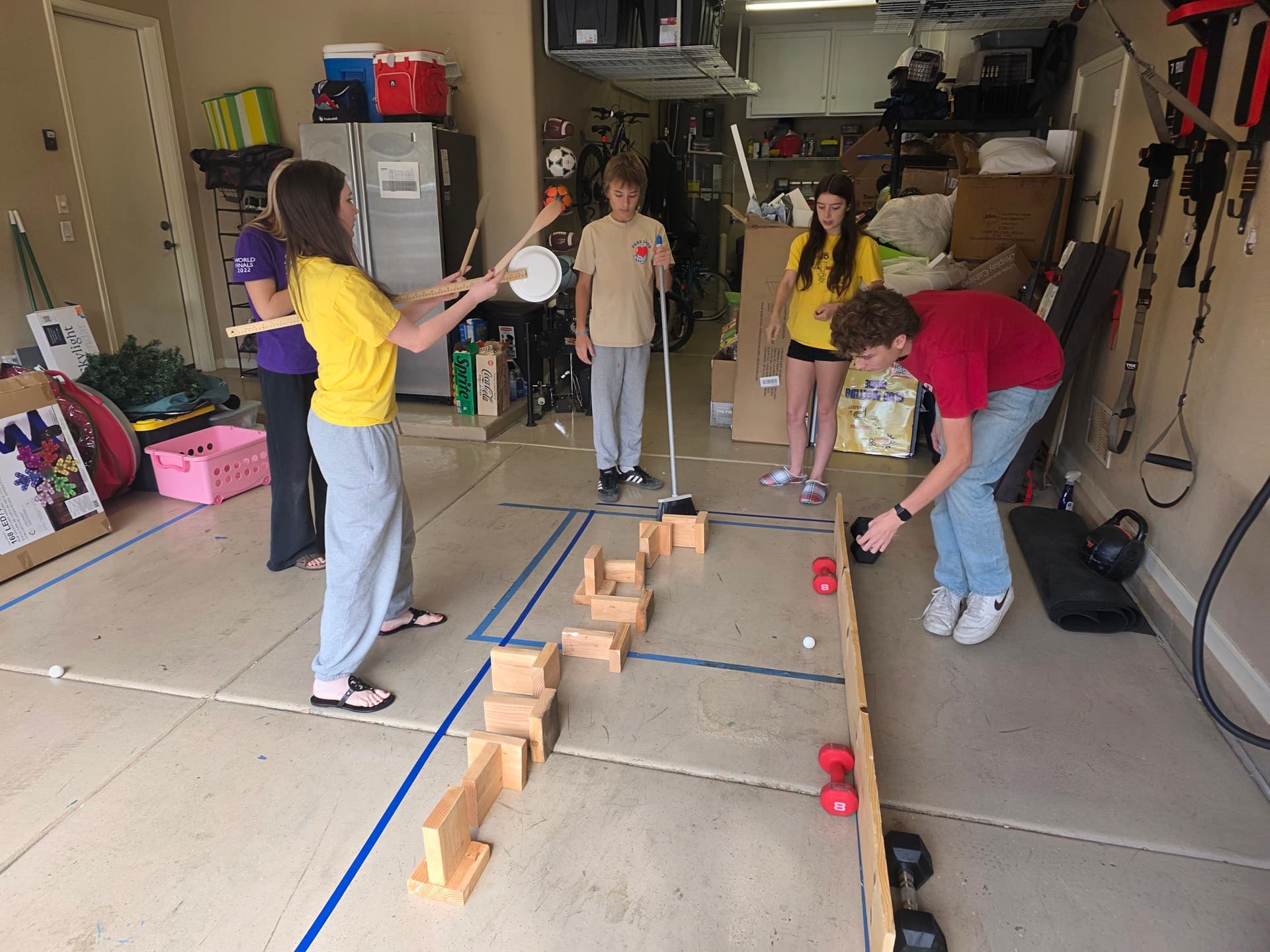
Remaining true to our message, we didn't let the beginning obstacles become roadblocks. By using the skills we teach — formulating and executing ideas, testing, and pivoting — everyone involved contributed their unique strengths. Things were clumsy, and several issues seemed insurmountable. Nevertheless, positive thinking and experience with impossible challenges kept us focused on our goal. Relying on creativity, resourcefulness, resilience, and teamwork, we eventually developed our framework. Once we had our basic foundation, we started building.
Nancy Zayas and Sarah Thukral, also former coaches, were excited to jump on and help lead the younger division team. We moved into a larger space in the neighborhood and found our last outstanding coach, Devon Baker, to lead our brand-new Primary team. Together, the high school board members, coaches, brave parents, and teams worked to form a brand new club, recruit members, and prepare them to compete in under two months.
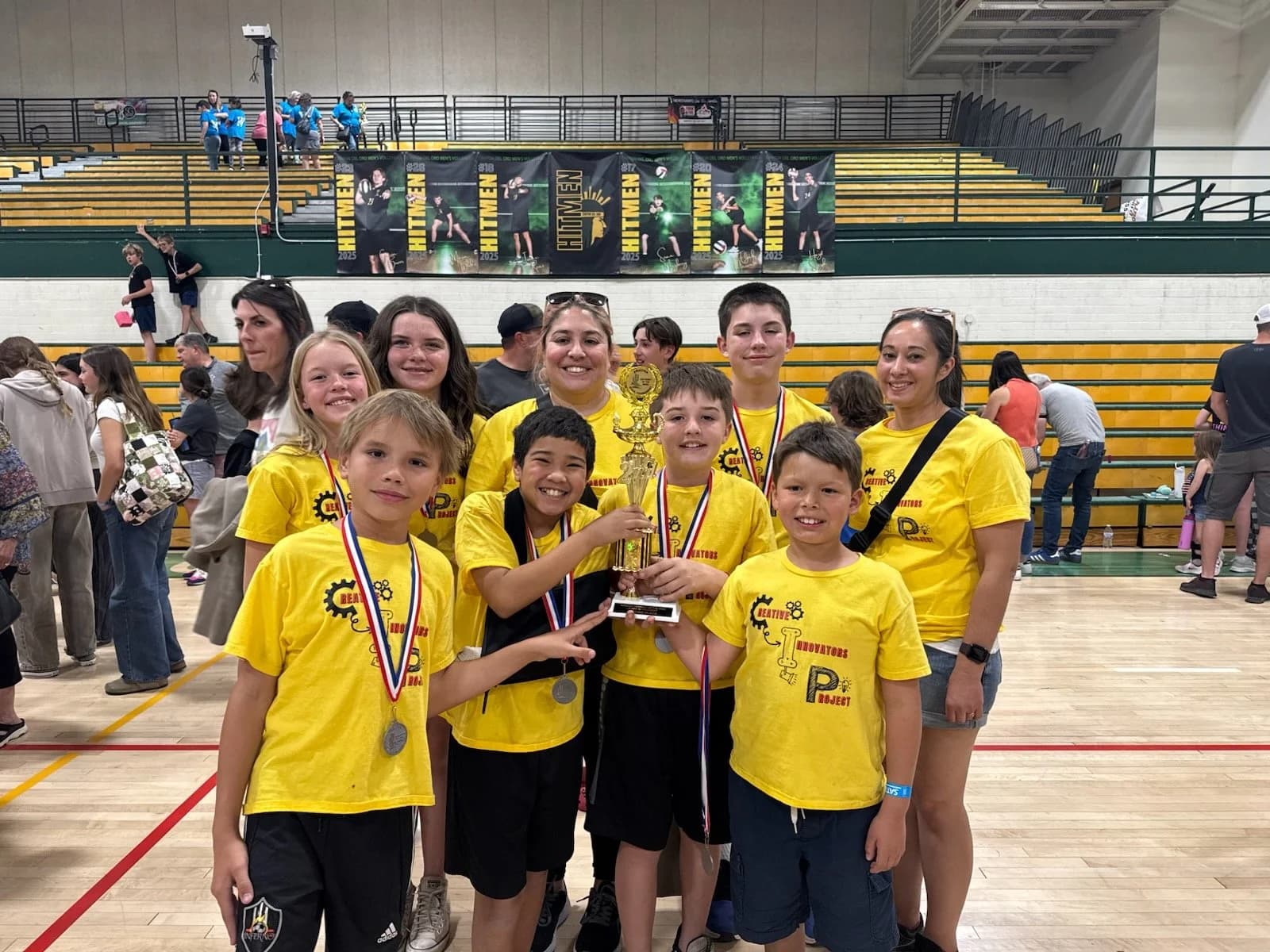
To everyone's surprise, we achieved and exceeded that lofty goal. All teams competed at the Regional Tournament; the competitive teams took top spots and advanced, repeated that success at the State Tournament, and qualified for World Finals in Michigan. The whole club pitched in time and effort to fundraise, and down to the wire was able to send the high school team. They learned success wasn't defined by the tournaments, but by all the real-world problems they had to solve to get there.
Our vision and who we are
We like to win. But trophies aren't why we do it.
Healthy competition is a good thing and we encourage it. But maybe the reason it's worked is that winning was never the point.
Internal motivation & autonomy
We take time to discover and build internal motivation in children. They develop the confidence and skills to take calculated risks, enjoying the process of exploration over the pressure of perfectionism.
We celebrate neurodiversity
Instead of rigid expectations and direct comparisons that leave little room for individuality, we celebrate the way each student thinks — and show them it's exactly what their team needs.
Divergent thinking, on purpose
We explain and discuss divergent thinking skills, encouraging every student to become comfortable practicing both conformity and congruency, as well as chaos and spontaneity, in their work.
The Creative Innovator Method™
A toolbox of hard skills and soft skills.
Our method begins by teaching both hard and soft skills to create a “toolbox” students can use at their discretion to achieve their goals. Through 1-on-1 coaching feedback, team training, age-division specific curriculum, and mentoring from veteran members, we support their learning process with strength-focused feedback.
Both are crucial for future career success in any field — hard skills demonstrate proficiency in a role's technical aspects, and soft skills create a positive, productive work environment.
Personal attributes and interpersonal abilities, developed through experience and practice.
- · Communication
- · Teamwork
- · Problem-solving
- · Leadership
- · Resilience
Specific, teachable, and measurable technical abilities acquired through education and training.
- · Engineering
- · Acting
- · Singing
- · Art
- · Construction
- · Coding
- · Script-writing
- · Design
Our mission
Support every child's growth into a creative problem-solver.
At CIP, we endeavor to support your child's growth both individually and as part of a team. As part of our club program, children learn to assess their strengths, weaknesses, likes, dislikes, personality, and learning styles — as well as those of the people they work with — through assessments, positive feedback, and constructive criticism. We help them discover their unique talents and how to use them in teams to effectively reach goals.
Starting as early as kindergarten and building through high school, we teach members concepts such as brainstorming and compromise — independently, interdependently as part of a team, and collaboratively with a coach's support. Child-led groups mentored by a coach are encouraged and given opportunities to develop ideas from their own perspective to help their community and club.
Come see it for yourself.
Not sure where your child fits? Reach out and we'll help place them — or come to an open practice and watch a team work.