Skip to content
Creative Innovators Project

Odyssey of the Mind

The heart of what we do.

Odyssey of the Mind is an international problem-solving competition that teaches children how to use creativity — and combine interests, passions, and learning opportunities — to overcome challenges. The videos below explain the ins and outs of the program and what makes “OM” so special.

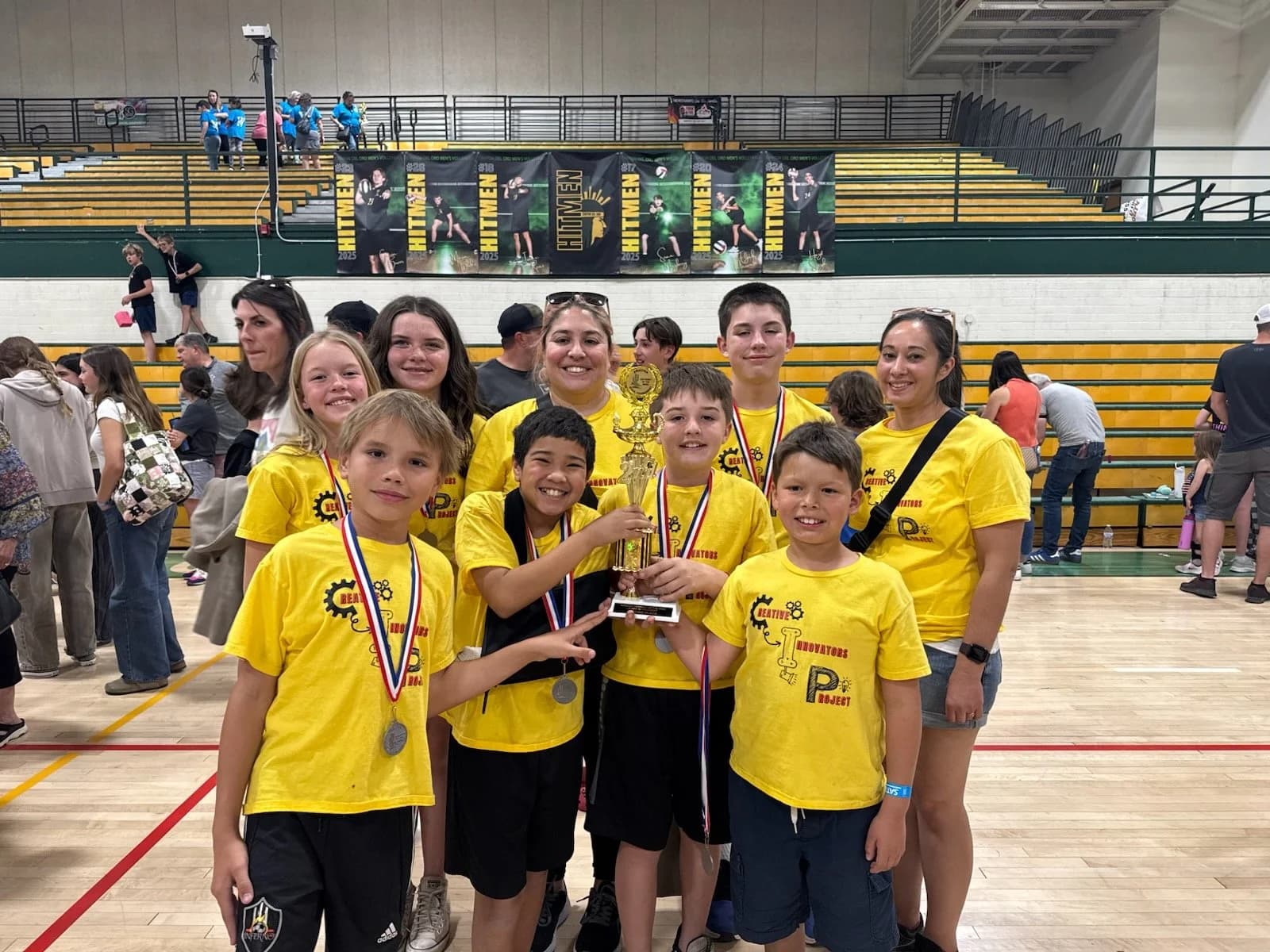
CIP Odyssey of the Mind team celebrating at a tournament

1. What is Odyssey of the Mind?

This introductory video explains what Odyssey of the Mind is and how it works — the structure, the problems, the process of problem-solving, and how teams learn through necessity and application. Watch how children connect fields of study by working on open-ended problems.

2. A season, start to finish

We follow one of our teams from the beginning of the OM season through competition. An up-close look at the numerous problems OMers face — and how tackling seemingly impossible challenges enriches their entire outlook on life.

3. Judging, scoring & the coach's role

How open-ended solutions are judged and scored, an in-depth look at the coach's role and how OM coaching differs from what you might think, and what a team must do to be successful.

4. World Finals

The highlight and ultimate competition. The journey from qualifying to attending, each day of competition, and the highs and lows every team faces — an experience well beyond the Regional and State levels.

Spontaneous

What is a Spontaneous Problem?

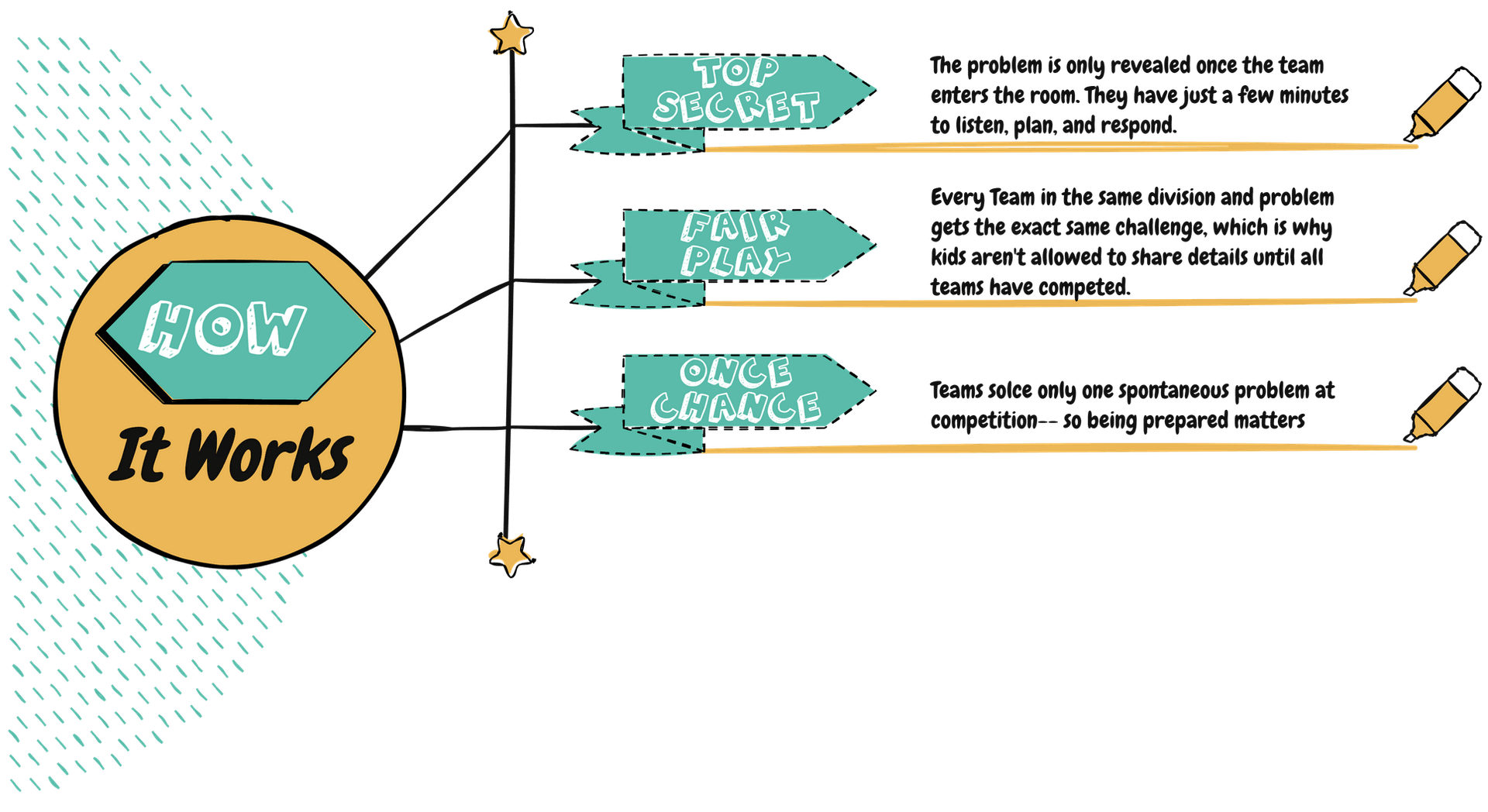
Spontaneous is the part of Odyssey where kids get to think fast, get creative, and problem-solve as a team. While long-term projects show what they can do over months of work, spontaneous shows how they think on their feet.

There are three possible types of spontaneous problems:

  • Verbal: Kids respond with words, ideas, or creative answers.
  • Hands-on: Kids use materials to build or complete a task.
  • Hybrid: A mix of both building and explaining.
Spontaneous problem types: verbal, hands-on, hybrid

Verbal problems

Kids solve the challenge by speaking their ideas.

  • · They're given a topic or a starter phrase.
  • · Each team member takes turns giving answers within a short time limit.
  • · Common answers earn points, but unusual, creative, or funny ones earn more.
Example problem
  1. You have 1 minute to think and 5 minutes to respond. You may ask the judges questions once time begins; however, time will continue. You are not allowed to talk to each other at any time.
  2. You will receive 1 point for each common response and 5 points for each creative response.
  3. There are 35 items and two containers on the table. With each response, you will place one of the items in the container.
  4. Your problem is to give examples of something that follows something else.
Common answers

Literal: “3 follows 2”, “B follows A”. Seasonal: “Spring follows Winter”.

Creative answers

“Predators follow prey.” “Fans follow celebrities.” “C follows A in the alphabet unless you start at B.” “Sharks follow the scent of blood in the water.”
Hands-on problems

Kids solve the challenge by building or doing something with materials.

  • · They might be asked to build a bridge, toss objects into a target, or create something that meets certain rules.
  • · Points are awarded for creativity of the solution — use of materials, variety of ideas considered, and the final result — and for how well the team works together.
Example problem
  1. You have 6 minutes to discuss the problem and create your solution. The judge will warn you at 2 minutes, 1 minute, and 30 seconds remaining.
  2. Your problem is to build as many bridges as possible that span between these tables. The tables are sectioned into scoring areas.
  3. A bridge is eligible for score as long as it only touches the top surface of both tables. Bridges are not allowed to touch each other.
  4. Scoring: each legal bridge receives the score of the highest area it touches on each table; 1–15 points for creativity; 1–10 points for teamwork.

Verbal / hands-on problems

Kids solve the challenge by both creating and explaining.

  • · They might build something, draw a picture, or make up a skit — and then give responses about it.
  • · They are scored on their creativity and teamwork.
Example problem
  1. You have 2 minutes to think and discuss and 5 minutes to respond.
  2. On the table is a drawing and markers to use to add to the drawing. Nothing else can be used.
  3. To give a response, select a marker and add to the drawing, then give your response and place one of the 35 items in the container.
  4. Scoring: 1 point per common response, 5 per creative response; 1–15 points for how well your team works together.

At Creative Innovators, we practice all three types so kids feel confident and ready.

Why spontaneous matters

  • · Builds quick thinking and problem-solving skills
  • · Encourages flexible thinking (there's no one right answer!)
  • · Strengthens teamwork and communication
  • · Helps kids feel confident when facing the unexpected

How you can help at home

  • · Try fun practice problems together — keep it lighthearted!
  • · Celebrate unusual or funny answers
  • · Remind kids that it's about thinking creatively and working as a team, not just “getting it right”

Let's create together

Interested in an Odyssey team?

Tell us your child's grade and interests and we'll get in touch within 48 hours.

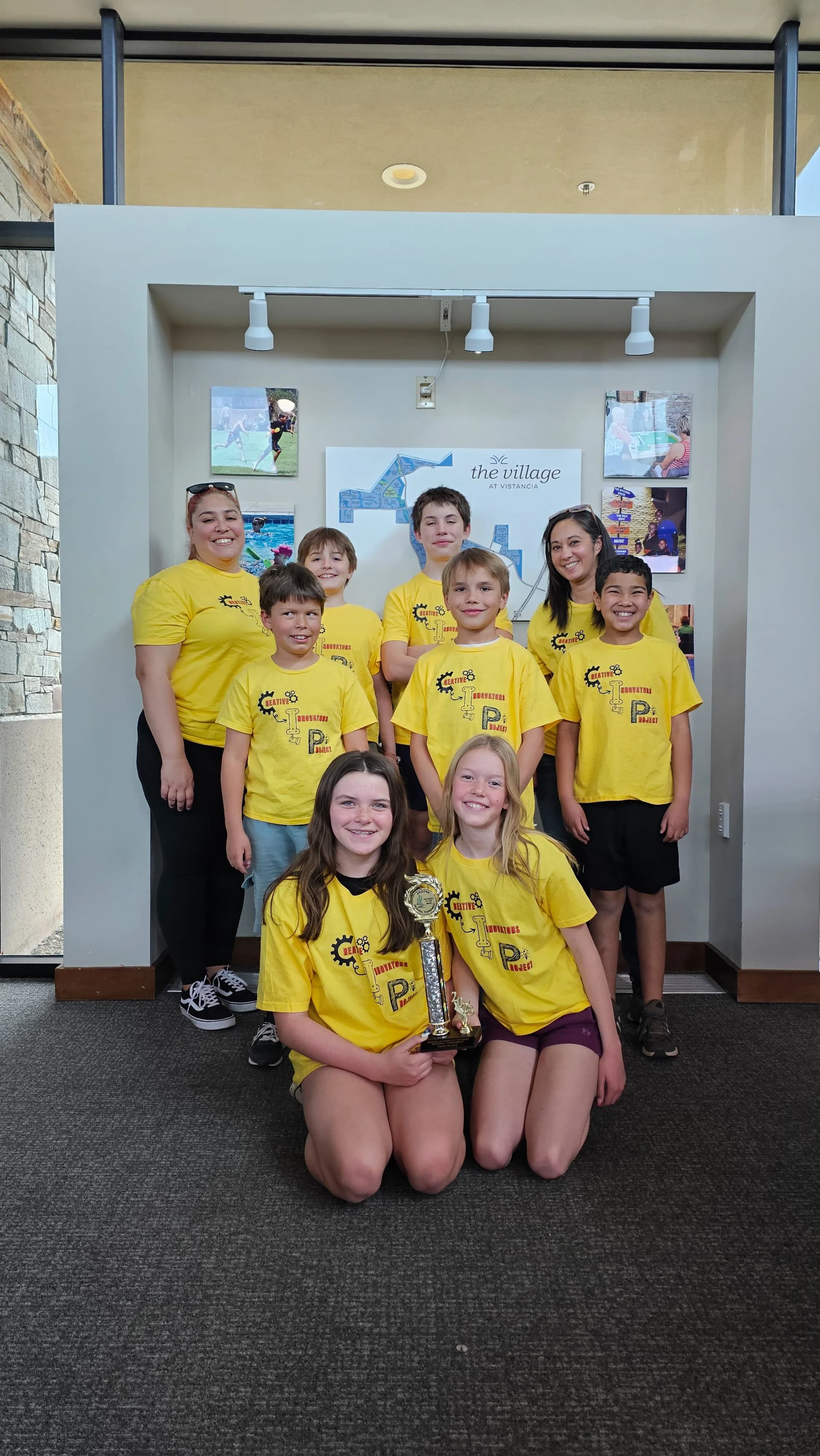
CIP team with a trophy

Optional — only needed if you'd like a call or text

If you have more than one student, list them in the message below

Preferred way to reach you

We only use your information to respond to your request. We never sell or share it.

See all four divisions.

Primary (K–2) through Division 3 (high school) — every level practices creative problem-solving at its own pace.